
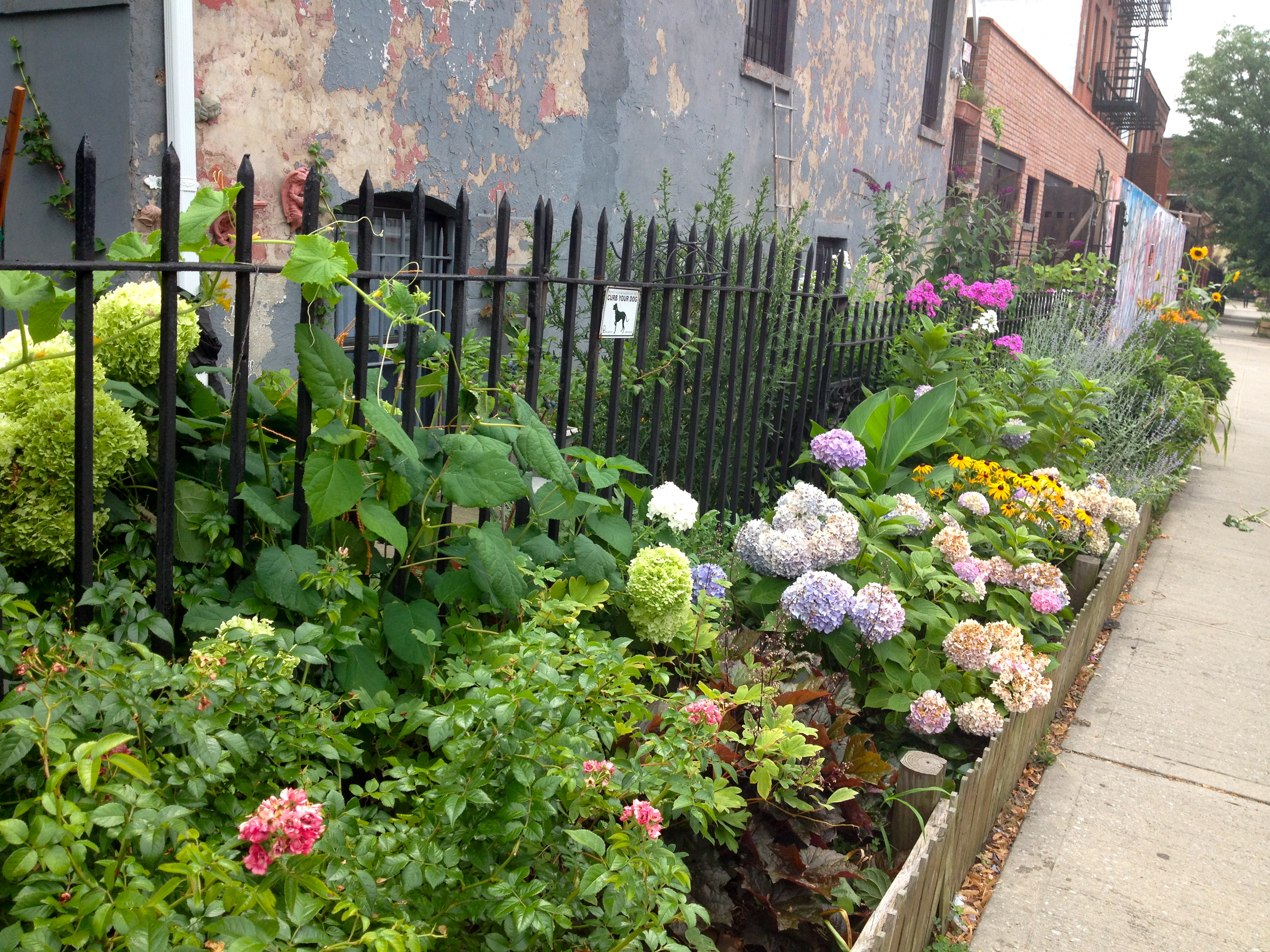
 This Brooklyn sidewalk garden on the block next to ours is exactly how I want my wild country side yard to be. Juuust out of frame: an apple tree (I have that), and this awesome mural (I don’t have that).
Category: Green
Heirloom Slimer
 This weekend we plucked 26 perfectly ripe tomatoes from the garden… and this cucumber that looks exactly like Slimer from Ghostbusters.
Slimer image from here.
Peach Picking
 Peaches in the summertime, Apples in the fall, if I can’t have the girl I love, I don’t want none at all. We’re in the thick of it right now, the sweet-hot afternoons where the orchards that line the country roads leading to our house burst forth in a rush of sun-warmed peaches that are so sweet and juicy, taking a bite, sinking your teeth right in, juice running down your chin, has you saying “ARE YOU KIDDING ME!?” because you just can’t believe that something that truly incredible, miraculous, sweet and fresh and tart and mouth round just came right off a tree. My sweet little cousins came for a visit from the west coast, and we had a true southern summer day- swimming hole, fireflies, and fresh peach picking of course. On the agenda for tonight: pie.


Summer Tonic pt. 1
 Whew, it’s hot! In an effort to try a “more vintage lifestyle”, as my Dad calls it (or as my Mom calls it: “crazy”), we are making an effort to forgo air conditioning this summer. Our Brooklyn apartment faces a back corridor of gardens and has a lovely cross breeze, and our old farmhouse is situated in the ancient manner, facing due East/West, meaning that from an hour after sunrise to an hour before sunset there is no direct sunlight streaming in through the windows. While in winter I lamented not getting enough direct light to nurture an indoor lemon tree (the epitome of house-dwelling luxury to me), now that summer’s heat is upon us, I understand. This orientation means the house stays a good 10-20 degrees cooler than it is outside at all times. Brilliant old almanac readers. Still, Virginia in the summertime can be, well, let’s say “balmy”. For us, that means ceiling fans going full tilt boogie, popsicles in the freezer, bathing suit in the freezer, sprinkler in the yard, cotton nightgown on repeat. And still, we’ve been craving refreshment. So. Enter the summer tonic. We’ve made a few and we love them all, so here’s the first one concocted, a brew of the wild mint and lemon balm (brought by Mama to plant by the beehives) that spread and grow voraciously in every bed and along every treeline.
  Some people think of both of these plants as runaway scoundrels who hold flower beds hostage and generally take over, shooting up their leggy stems and heart shaped leaves wherever they possibly can. This invasive carpetbagging reputation is true in some respects, but when you consider the benefits of lemon balm and mint, both as flavor makers and as medicinals, the fact that they’re simply growing wild everywhere seems more like a little miracle than a problem. Here, a fast-and-loose miracle tonic recipe in action:
Lemon Balm and Mint Summer Tonic
2 cups packed mint leaves
2 cups packed lemon balm leaves
Water
Gather a big bunch of mint, gather a big bunch of lemon balm, wash and strip leaves from stems. Fill a pot with water, add leaves, bring to a boil. Strain leaves, pour tea into half gallon mason jars, put in fridge to chill. You can also add honey if you want a little sweetness.
Once cold, serve over ice. Sit on the porch steps, try not to drink the whole batch in one sitting. Good luck.
Bees: Movin’ on Up
 if you’ve encountered either me or my Mama at a cocktail party in the last year you will have heard all of this and more: the first question anyone asks us when they hear we’ve started keeping bees is “when do you get the honey!?”. That is a good question. The answer is sort of complicated because the final answer is “Maybe never, or perhaps in October?”. A little explanation: bees make honey for themselves, to nom nom nom through the winter, and you have to be sure they have enough for themselves before you take any. When you first get a hive, the bees are all in one hive body, a single box. They build out comb and store honey and the queen lays eggs and they raise their brood, growing, building up their hive until they fill up that box. Just like any growing family in a Brooklyn apartment, there’s a lot of discussion on what to do next, how to renovate, whether to move upstate. Luckily for the bees it’s possible to just double the size of the available real estate just by adding a new hive body up top. If only it were that simple for the Brooklyn brownstone (just add another one on top!).
 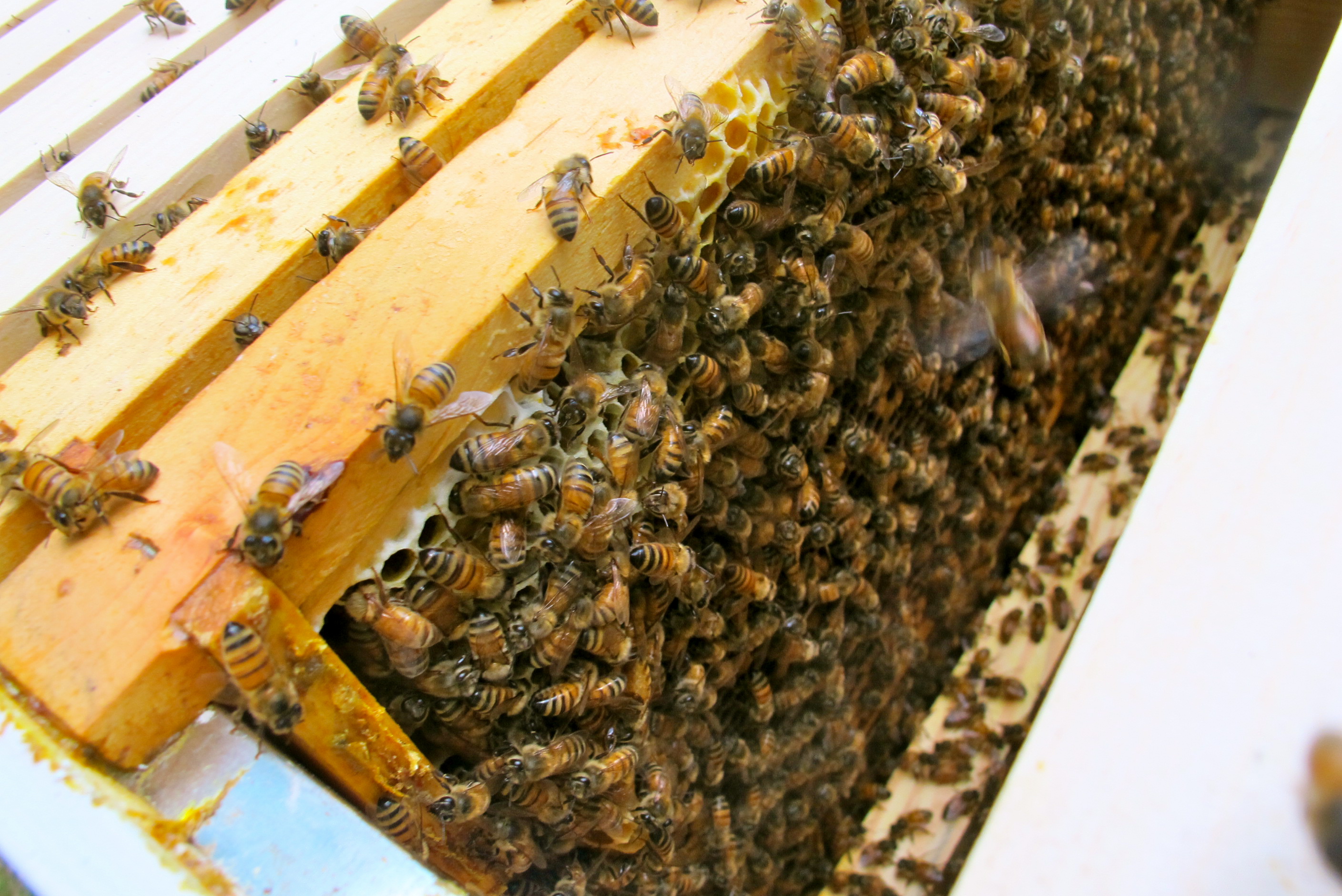 With the addition of a 2nd box, the bees have room to grow, to begin filling that hive body up with honey, pollen, eggs, and brood. Then when/if they have that hive body filled up, then you can add another, smaller box to the hive called a “honey super” and that’s extra, that’s gravy, that’s honey. We might not get that this year, we might not get that ever, but as of now we’re about halfway there. Two weeks ago we added the second hive bodies, and last weekend, after my great uncle Tall Paul’s 94th birthday party, Mama and I came home and did a late afternoon hive-inspection to see how the hives, Shangri-la+Xanadu, were doing. Shangri-la is always busier, always has a scrum of bees outside in the late afternoon, while Xanadu is a little mellower, her bees coming zagging in backlit in the afternoon sun heavy with loads of pollen and nectar. It’s almost impossible to tell what they’re up to until you open up the hive, and we’ve been consistently surprised. They’ve both started building out comb in their new additions, but Xanadu (quiet thunder) has stepped it up, is already putting away honey and is growing fast. The glistening comb in this picture is full of almost-ready honey, and the white capped comb at the top is honey stored and ready to go.

Mama took the top picture, I took the middle two, and Daddy (getting very close in just his shirtsleeves!) took the last one. Love+Honey indeed.
Finally, some Flowers
 This is the year of the rookie garden. Someday I will have my mother’s hands and my grandfather’s understanding of what plants need to go where (or at least maybe my other grandfather’s brilliant knack for just hiring someone to do it right), but in the meantime, I’m just playing fast and loose with seeds and starts and trials and errors and sun and shade and just trying to appreciate the loveliness of small successes as I make a (totally delicious) dinner involving 4 peas and 3 radishes. In all of this vegetable garden planning and hand wringing and dirt moving and cucumber roadtripping, I forgot about flowers. So, in some went. Two packets of impulse-purchase dollar-store wildflowers and the entirety of the Southern Exposure Seed Exchange’s Wild Garden Perennial Insectary Mix (for the bees) sown. Look at these seeds! Strange curlicues, barbed instruments of war, tiny drinking gourds, beach balls, tomatillos, snailshells, armaments, and toboggans. Go forth little seeds, go forth and bloom.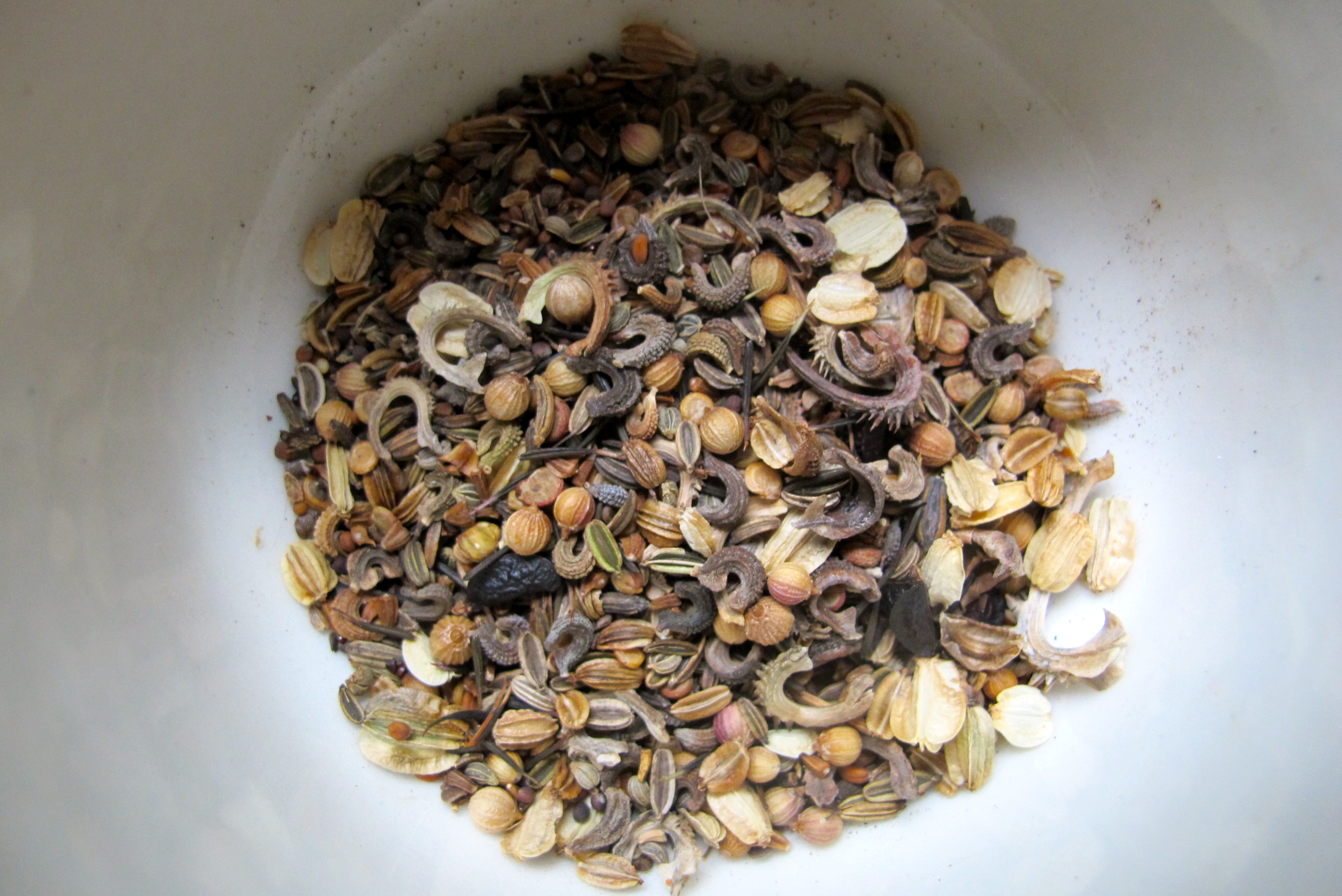
Mulberry Pie
 These are Mulberries. I have no idea how I hadn’t heard of them until just this spring. I mean, I knew a Mulberry Tree was a kind of tree that existed and that there was something vaguely to do with silkworms liking them, but that was it. I had NO IDEA that literally EVERYWHERE there are big beautiful Mulberry Trees growing with millions of dark, juicy, sweet, totally edible, totally delicious berries on them just ripe for the picking. I have a bunch of trees growing wild at my house, Sweetheart and I stopped for lunch at a roadside stand and there was a Mulberry Tree in the parking lot (dessert!), even on our block in Brooklyn, right by the bus stop, there are low hanging branches of this sweet fruit (and a bunch of bamboozled people waiting for the bus looking at me funny as I stop en route to the subway every morning to pick+shove a handful of the sticky sweet berries in my mouth).
  The Mulberry itself tastes most like a blackberry (almost I-dentical, actually), but bigger and juicier than the wild blackberries that are just starting to green up on the thorny embankments around here. So much sweet bounty, just growing for the taking? I say: FREE PIE! When the boys were down visiting from New York, Tony had specifically asked for a pie, so Seth and I took a ladder and a bowl out to the back yard and spent 20 minutes in the tree canopy, picking classically: a berry for the bowl, a berry for me, a berry for the pie, a berry for the pie-hole. We filled our bowl and baked her up. Deee-licious.
Mulberry Pie
This recipe was pretty inexact, which is usually not how I roll with baking, but with a berry pie, (apparently) it doesn’t really matter.
-One large bowl freshly picked Mulberries, enough to fill a tarte pan
-1/4 c. sugar
-2 tbs. flour
-2 piecrusts (I cheated and used pre-made)
-butter
-1 egg white
Preheat oven to 400
Toss Mulberries in sugar and flour
Line tarte pan with one pie crust, cutting off any excess, fill with berries
Cut a design into your top crust (or lattice it, or cut a slit… do what you feel! I cut stars)
Dot the top of the filling with as many pats of butter as you are comfortable with
Layer the top crust on top and crimp the edges (again, cutting off any excess)
Lightly whip egg white and brush crust with it
Bake for 15 minutes at 400, reduce head to 350 and bake for another 30 minutes, or until crust is golden brown
If you can possibly stand it, let the pie rest until cool so the gooey berry filling will set (cutting the pie warm means the filling will be oozy, you can make your own t-chart about the detriments of oozing filling vs. the benefits of eating warm pie).
Have any of you ever made mulberry pie? mulberry jam? I’d love any stories or recipes since I feel like I just discovered this AND it’s supremely old fashioned (my favorite combo).
Easter Egg Radishes
 O Easter Egg Radishes, with your multitude of colors and strange bulbous shapes, how delicious you are pulled right from the garden, thinly sliced, and put on a plate with thick dutch cheese, bread, and mustard (and a nice cold beer). We felt very European, and also, even though the chilly spring and our beginner-gardener-flailings means we aren’t pulling our radishes until mid-June, pretty proud of ourselves.
Shangri-La + Xanadu
 We’ve been spending our mornings drinking coffee and watching the bees zoom in and out of their hives. They leave the hive, shot out like a bullet, up and over the house making, yep you guessed it, bee-lines towards the ancient and gigantic blooming tulip poplar in the neighbor’s yard. On the way back, they weave woozily, back and forth in a zig zag, lady bees laden down with yellow bolls of pollen on either side of her back legs, under the wing, like saddlebags.
  And after much discussion (and minor confusion about which one was which “the one on the left is bringing in more pollen than the one on the right” which left? which right?) we have decided to name our hives: Shangri-La and Xanadu. Paradise.
Mama took the picture of the bee with the pollen. Isn’t she good?
Miss McKay’s Moon Vine
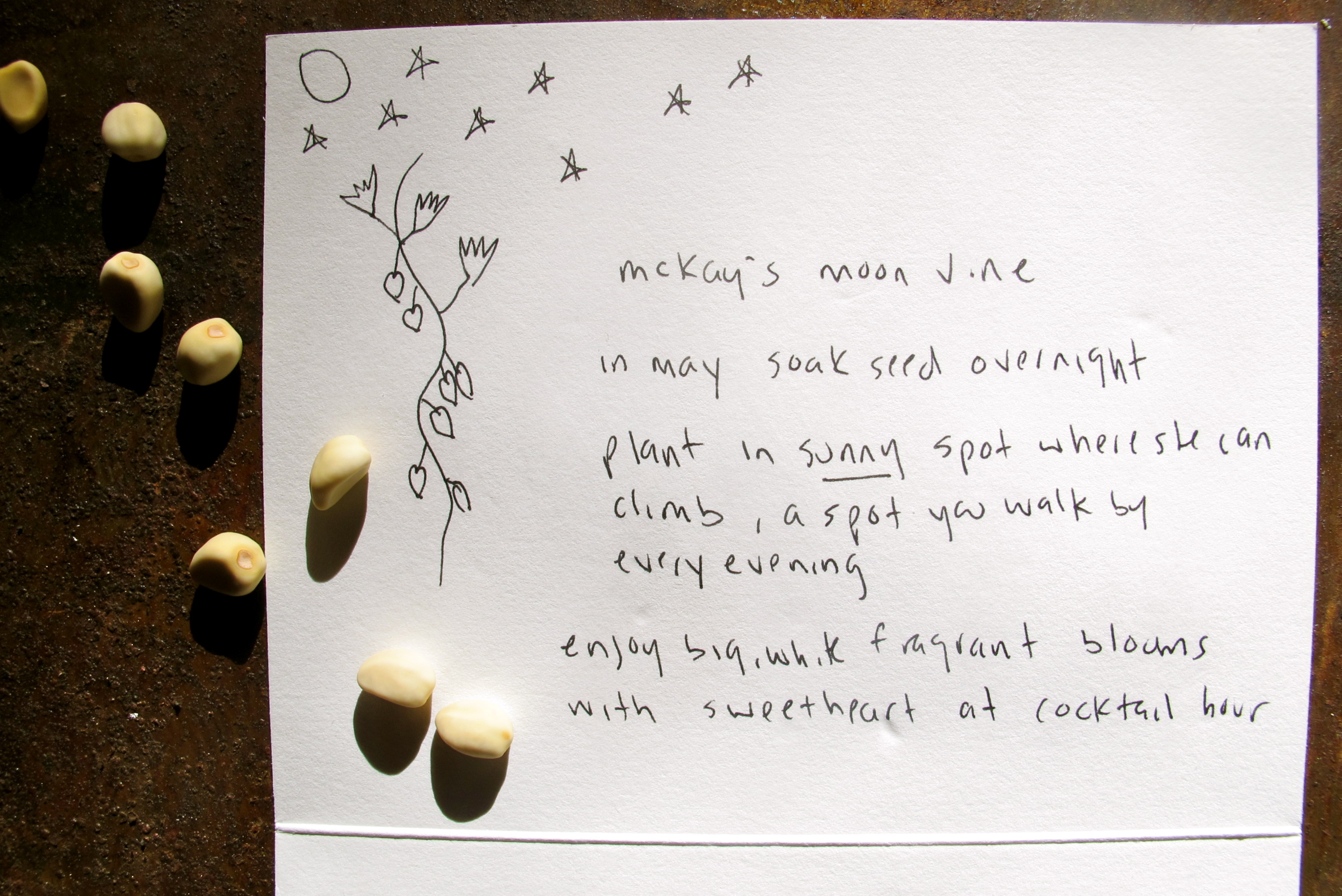 In the short almanac days of dark December, a care package came from Miss McKay. A burnished new short story and a bright yellow envelope, rattling and full of purpose, marked “open with care”. Inside the envelope, a dozen (magic?) seeds, labeled McKay’s Moon Vine, and accompanied by these instructions:
In May soak seed overnight. Plant in sunny spot where she can climb, a spot you walk by every evening. Enjoy big, white, fragrant blooms with sweetheart at cocktail hour.
Oh heart, those are my kind of instructions. And, through the trials of this strange and cold spring, almost at the very tail end of May, it is finally warm enough to plant them. Welcome Home.
 Feather By Feather